Tennis is linked to 9.7 extra years of life — more than jogging, cycling, or swimming.
(And it's the one thing that finally gets your kid off the screen.)
Copenhagen City Heart Study · Mayo Clinic Proceedings · 8,577 adults, 25 years
Coach Amani's parent-first method turns screen time into swing time. You learn a simple 10-minute routine, your child copies you, and your family gets back the time the screen's been stealing.
You go first. They grow next.
Built by Coach Amani Mitchell · 15 years coaching · 3× Region Champion, 2017–2019
The screen-time battle isn't the problem. It's the symptom.
You feel it already. The reluctance. The slumped shoulders. The "I'm bored" thirty seconds after the screen goes dark. Here is what the research says is quietly happening to a generation of kids while parents argue about screen limits.
Here's the part the headlines leave out.
None of this gets fixed with another app, another lecture, or another season of sideline pressure. It gets fixed the old way: a few minutes of real movement a day, a parent in it with them instead of on the sideline, and small wins a child can actually feel. That is the whole method. Tennis is just the doorway in — and it happens to be one of the most powerful doorways there is. Tennis is linked to a 9.7-year gain in life expectancy, more than any other sport studied.
Copenhagen City Heart Study, published in Mayo Clinic Proceedings.
You don't have a tennis problem. You have a connection problem.
Traditional sports don't fit every child. Some kids freeze in front of a coach. Some shut down when other kids are watching. Some just won't get off the couch. And the usual answer — sign them up, drop them off, hope it sticks — is exactly what pushes the reluctant child further away.
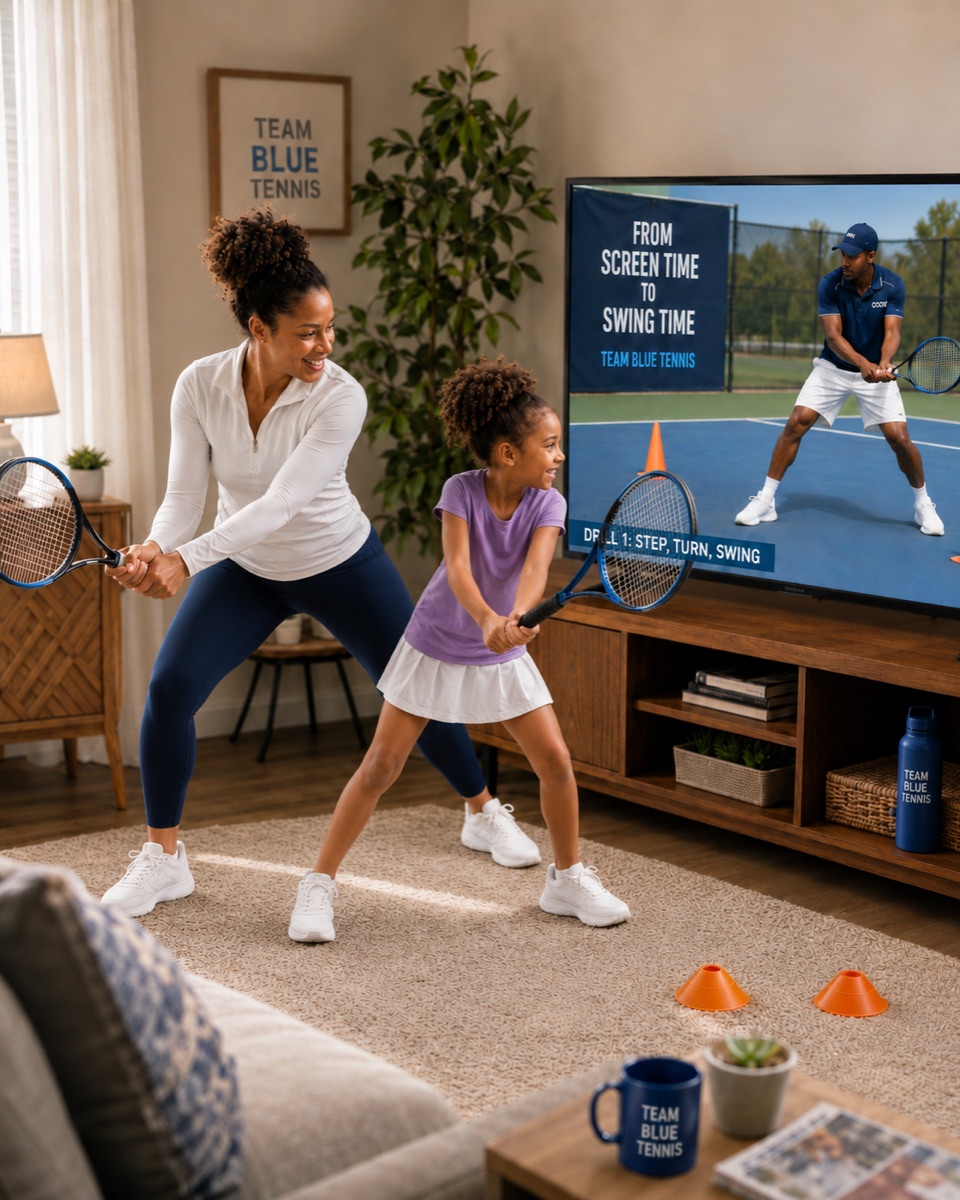 At home, together
The screen has become the babysitter.
Hours disappear into a phone. The spark, the eye contact, the willingness to try hard things — you can feel it fading, and you don't know how to get it back.
Youth sports turned into a trophy factory.
Pressure, politics, and parents screaming from the sideline. It teaches winning. It rarely brings a family closer. And the reluctant kid quits within a season.
"Drop-off" lessons leave you on the outside.
You pay, you wait in the car, you get a slightly better swing. Nobody hands you a role. The growth never makes it home with you.
And the clock is running.
The habits that shape a person lock in before the teen years. The window to build a confident, self-disciplined child is open now. It does not stay open.
 A few minutes a day
Tennis is just the vehicle. Quality time is the destination.
So we don't start with your child. We start with you. You learn a simple routine first — a few minutes of movement, a few easy swings, the same language Coach Amani uses on the court. Then you bring it home, model it, and invite your child in when they're ready.
Here's the one thing to believe: a reluctant kid never puts the screen down because you took it away. They put it down when they watch you pick something up. Believe that, and everything else takes care of itself.
Those apps were built by billion-dollar teams to hold your child's attention hostage. You're not fighting your child. You're fighting them. We just hand you a better weapon — a racket, a ball, and ten minutes a day.
You go first. They grow next.
A clear path. Not a pile of lessons.
You go first. They grow next. The parent learns the routine first. The child watches. Then the child joins when they're ready.
Parent Foundation
You learn first. Short, simple routines you can do in a driveway or a living room — movement, footwork, and the basic swings. You build the comfort and the language before your child ever steps in.
Child Introduction
Now you invite your child in. They watch you, copy you, and join when they're ready — in a familiar space, with no crowd and no pressure. Small wins they can actually feel, on their terms.
Family Routine
It becomes a rhythm. A few minutes most days, a weekly check-in, and a video you send Coach Amani for feedback. Screen time turns into swing time — and eventually, into a trip to the local court together.
Not every child is ready for a public court — and that's okay.
This program begins at home so the parent and child can build confidence with simple tennis routines. The goal is to prepare the child to eventually step onto a real court with less fear, more confidence, and a better understanding of what to do.
Some kids feel nervous on a public court. Some shut down in front of a coach. The parent learns first, the child watches, and the family builds small wins at home. Once the child feels more comfortable, in-person tennis becomes the next step — not the first obstacle.
Online first. Confidence first. Court second. Online tennis is not replacing in-person tennis. It is preparing your child for it.
We don't start a nervous kid with a fast ball flying at them.
We start with soft foam and low-compression balls — they move slower, bounce lower, and are easy to hit. Less speed, less fear, and a lot more "I did it." As your child's confidence grows, so does the ball. It's the same way every modern junior program eases kids in, built right into your simple at-home routine. Nobody gets overwhelmed. Everybody gets a win.
Slower ball. Lower bounce. Bigger wins.
Foam & Red
Slowest, softest. The fearless first hit.
Orange
A little more bounce as control builds.
Green
Closer to the real thing, still forgiving.
Yellow
The full ball — ready for the court.
Everything you need to lead it at home.
Parent Orientation
The first move most parents get wrong — and the exact 10-minute routine to lead week one without a single argument.
Simple Drills
Living-room drills that get a screen-glued kid moving in 5 minutes — no court, no driving, no "I'm bored."
Weekly Check-Ins
A weekly check-in with Coach Amani so the work actually gets done — because the families who show up are the ones whose kids change.
Video Feedback
Send one short clip a week and get back real coaching from 15 years on the court — privately, just for your family.
Built for the child who needs a softer start.
If any of these sound like your family, this was made for you:
- The screen-focused kid
- The reluctant beginner
- ADHD & autism-friendly
- The low-confidence child
- The "won't get off the couch" kid
- Busy families who need structure
The parent becomes the bridge. The child joins when ready.
Parent-first models are used in several child development fields because children often grow best when the parent is trained, supported, and involved at home. Team Blue applies that same family-centered idea in a non-clinical tennis program.
Research has also linked tennis participation with long-term health benefits, including a 9.7-year life expectancy association in the Copenhagen City Heart Study.
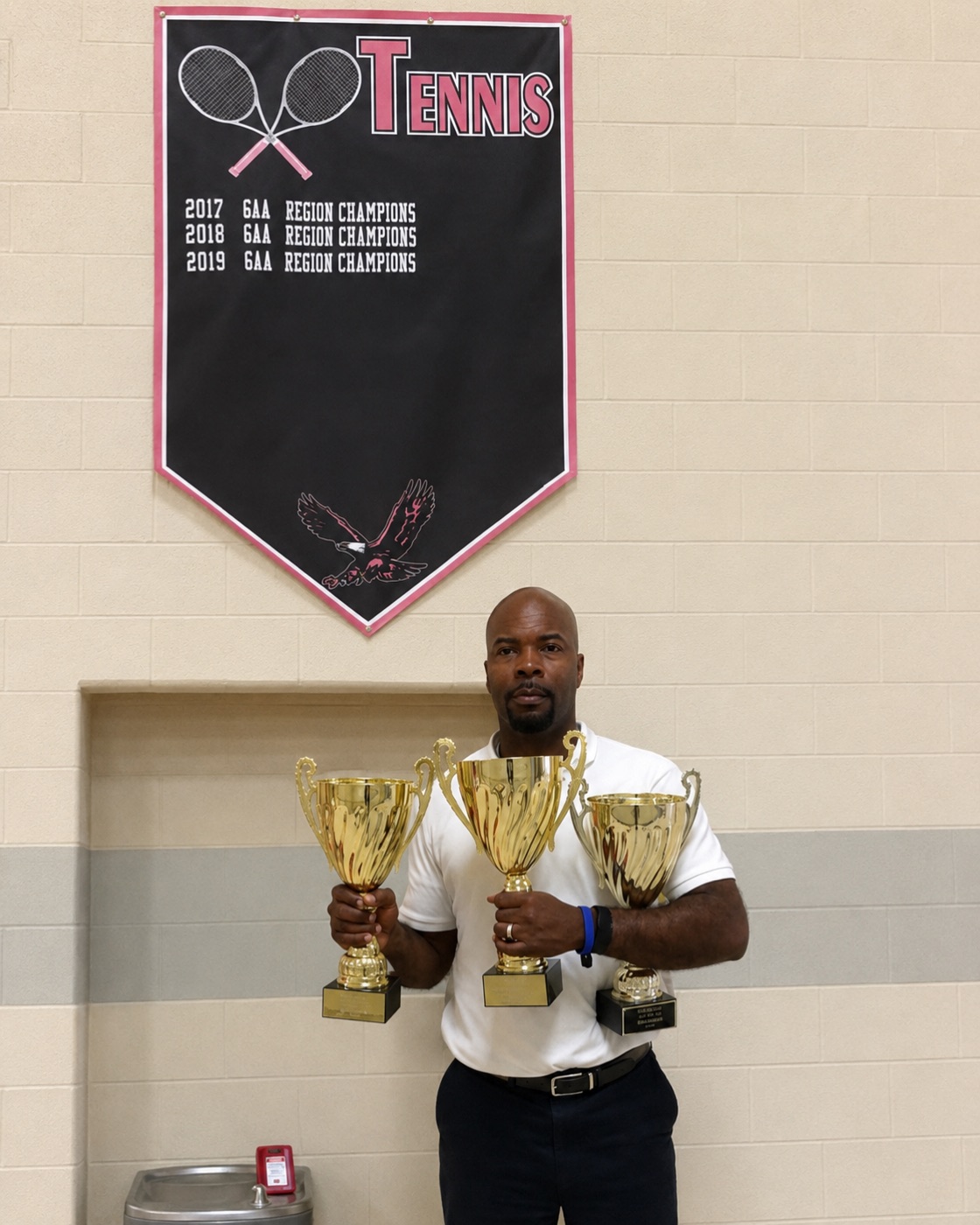
15 years on the court taught me one thing: build the human first.
"For years I was a good coach who kept losing the kids who needed me most — the nervous ones, the shy ones, the ones glued to a screen at home." That's the problem Coach Amani Mitchell set out to solve. Founder and head coach of Team Blue Tennis, with more than 15 years coaching beginners, reluctant athletes, and families who want tennis to be more than a sport.
He knows not every child is ready for traditional sports right away. Some need a slower start, more encouragement, and a parent who can model the first step at home. That's why he built the parent-first approach. His message is simple: you go first, they grow next.
The 12-Week Founding Family Challenge.
In 90 days, go from "please get off the iPad" to real time together as a family — and a kid who grabs the racket on their own. We're opening just 10 founding-family spots — you get the full parent-first system, weekly coaching, and Coach Amani in your corner, at the founding rate. Enrollment closes the moment they're full.
Committed families who may need support can ask about a limited number of Commitment Scholarship spots — reduced tuition, same commitment.
The swing is nice. The change in their kid is everything.
I would absolutely recommend Coach Amani and Team Blue Tennis. Bring your kids out, bring yourself out, and give it a try — tennis is truly a sport for life.
Team Blue is not just a tennis program — it feels like a tennis family. The players grow as individuals, but they also learn how to become better teammates.
Coach Amani brings passion, experience, and a genuine love for the community. Team Blue Tennis is a positive environment where kids develop tennis skills, fitness, and confidence without everything being focused only on competition.
Hear it in their own words


The honest answers
It's a parent-led family coaching program from Team Blue Tennis. The goal is to help families reduce screen time and replace it with movement, tennis-based activities, confidence-building, and quality family connection at home. It's not just online tennis lessons — it's a family accountability system that uses tennis as the tool.
That's expected for some families — and it's exactly why the program begins with the parent. You learn the simple activities first, then invite your child in. That lowers the pressure and lets the child see you modeling it before they ever have to try.
No. The program is beginner-friendly. Parents and children don't need any tennis experience to start. The activities are simple, short, and built to grow confidence step by step.
No. A court helps but isn't required. Many activities can be done at home — in a driveway, a hallway, a yard, or a local park. The early focus is movement, coordination, footwork, confidence, and simple swing patterns.
Trade screen time for active family time.
Picture a Saturday at the park where your kid asks to play, a dinner with no screen fight, a child who's proud of something real. That's where this goes. Start with the free 2-minute Reality Check — see exactly where your child stands today, and the first step out.